
Building Designer or Architect in Victoria? The Real Difference
Last updated: 2 November 2026 · Written by Nino Muratovski, Registered Building Designer, DP-AD 44189
Two registered professions in Victoria design buildings and take projects from the first idea to the finished building. This guide compares them side by side, stage by stage, using only the words of the regulators and the Victorian Government.
Short answer: In Victoria, Registered Building Designers (Architectural) and Registered Architects both produce plans and specifications for building projects
, in the Victorian Government’s own words.[1] Building designers in this class work on all classes of buildings and types of construction.[2] The real differences are the title, the Act, the regulator and the education pathway, not the work itself.
Searching for “draftsperson”? It is the same registration: on 1 February 2024 the Draftsperson category was renamed Building Designer.[10]
Stage by stage
What each profession does, from start to finish
Each line quotes the official description. Where the official source does not mention a stage, we say so rather than guess.
| Project stage | Registered Building Designer (Architectural) | Registered Architect |
|---|---|---|
| Site and feasibility | Not listed in the BPC class description | ✓ selecting sites and conducting feasibility studies[3] |
| Design and drawings | ✓ Produce plans and documentation for building work[2] | ✓ designing and planning buildings and outdoor spaces[3] |
| Which buildings | ✓ all classes of buildings and types of construction[2] |
✓ Houses, commercial buildings, interiors and outdoor spaces[3] |
| Planning permit | ✓ can assist in building or planning permit applications[1] |
✓ coordinating regulatory approvals (such as planning and building permits)[3] |
| Energy and bushfire | ✓ Designs consider energy rating reports and BAL ratings (AS 3959)[2] | ✓ maximising the project’s environmental efficiency; BAL ratings listed as a required skill[3] |
| Engineers and consultants | ✓ Brief and coordinate secondary consultants, such as engineers[2] | ✓ coordinating specialists and consultants[3] |
| Construction documentation | ✓ Documentation detailed enough for permits, tenders and contracts[2] | ✓ produce plans and specifications[1] |
| Building permit | ✓ Initiate building permit applications and liaise with the building surveyor[2] | ✓ coordinating regulatory approvals (such as planning and building permits)[3] |
| Tender | ✓ Prepare documentation so builders can tender[2] | ✓ Victorian Code for Tendering listed as a required skill[3] |
| Construction stage | ✓ Administer and monitor projects they have documented, on behalf of clients[2]; can manage building contracts[1] |
✓ managing budget and the construction process[3] |
| After completion | Not listed in the BPC class description | ✓ overseeing building maintenance[3] |
Registration and accountability
How each profession is regulated
| Registered Building Designer (Architectural) | Registered Architect | |
|---|---|---|
| Law | Building Act 1993 (Vic)[16] | Architects Act 1991 (Vic)[15] |
| Regulator and public register | Building and Plumbing Commission (BPC), which took over the VBA’s functions on 1 July 2025[12] | Architects Registration Board of Victoria (ARBV)[3] |
| Protected words | Working as a building designer without registration is an offence under the Building Act 1993[4] | architect, architectural services, architectural design servicesand architectural design[4][5] |
| Minimum education | Advanced Diploma of Building Design (Architectural), or Bachelor of Building Design[2] | a 5-year Master of Architecture or equivalent qualification[3] |
| Experience | At least 2 years, supervised by a registered Building Designer (Architectural), a registered architect or a Domestic Builder (Unlimited)[2] | At least 2 years, plus a registration pathway against the National Standard of Competency for Architects[3][14] |
| Professional indemnity insurance | Compulsory. Minimum $1.5 million per claim including defence costs, or $1 million plus $500,000 for defence costs[6][13] | Compulsory. Minimum $1 million per claim, or $1.2 million including defence costs[7] |
| Ongoing training (CPD) | Not compulsory yet; proposed by the Victorian Government[8] | Compulsory: at least 20 points a year[9] |
| Who may prepare plans for building works | ✓ Both, each with professional indemnity insurance[11] | |
Facts only
Where the two systems do not line up
- The registration class created under the Building Act is called
Building Design (Architectural)
,[2] yet under the Architects Act the same practitioner may not describe their service asarchitectural design
.[4] - The Victorian Government describes both professions with the same sentence: they produce plans and specifications for building projects.[1]
- A registered architect can supervise a building designer’s qualifying experience.[2]
- The compulsory minimum insurance for building designers is not lower than for architects: $1.5 million per claim including defence costs, against $1.2 million for architects.[6][7][13]
For clients
How to choose
Check before you sign
- Check them on the public register (BPC or ARBV).
- Check their professional indemnity insurance.
- Check whether they offer stage-by-stage services, not just a full package.
- Check whether you can stop at any stage without paying for work that has not started.
- Check completed projects like yours.
- Check who will actually design your project.
How we work at NM Architecture
- The first conversation is free.
- Fixed fees, itemised stage by stage.
- You decide before each stage, and pay only for the stages you need.
- Every design starts from your brief and your site, never from a standard plan.
- We manage planning and building permits for you.
- Every project is led by our founder.
Quality depends on the person, not the title. Compare portfolios, registration and insurance, then choose.
In practice
Three of our projects, stage by stage
The table above is what the regulators say. These are the stages we delivered on three of our own projects.

Sandringham Heritage Residence
Sandringham · City of Bayside
Heritage alterations and a new extension: basement, lift and rooftop terrace, 993 m². Heritage, design and flood overlays.
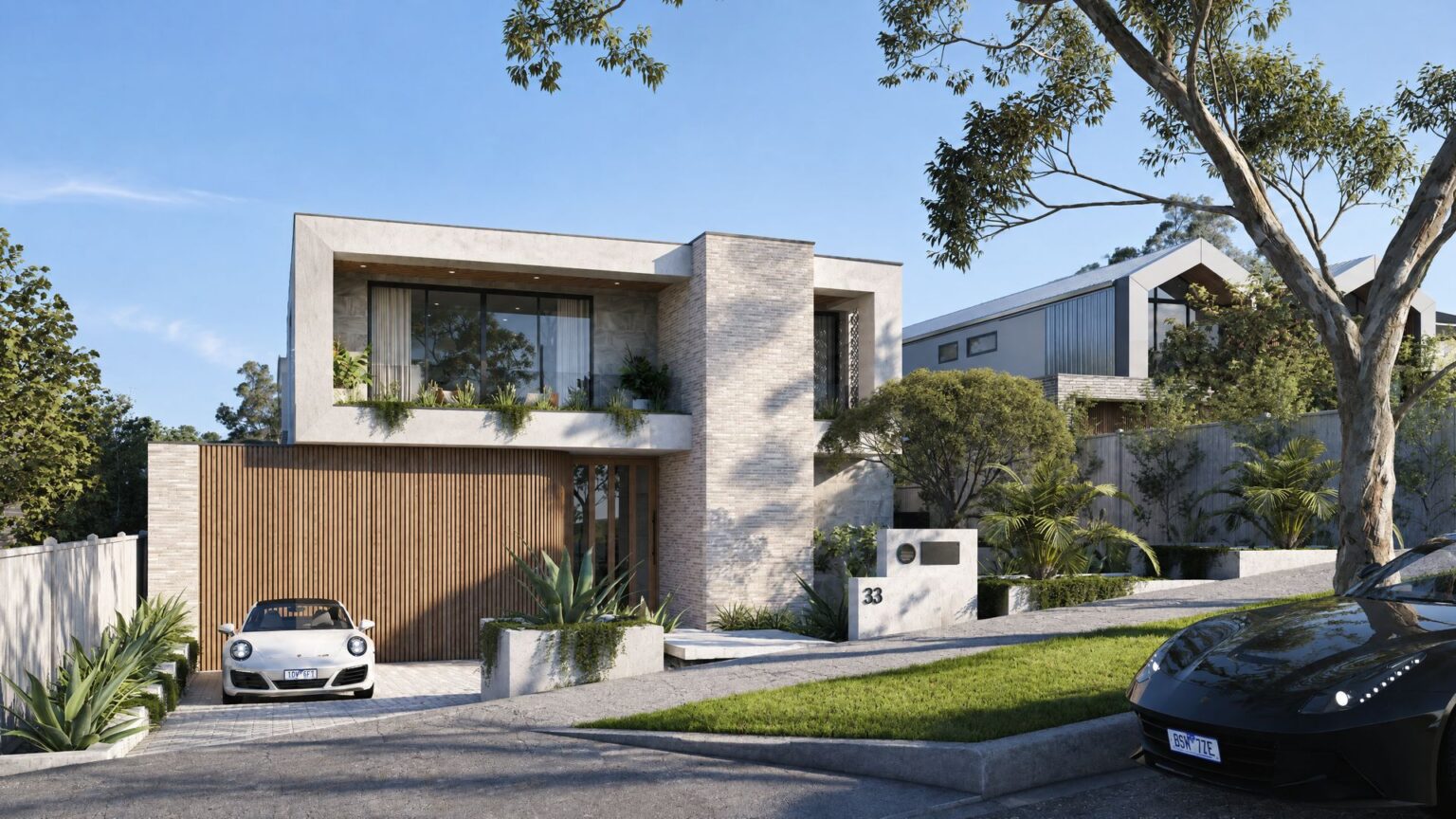
Balwyn North Luxury Residence
Balwyn North · City of Boroondara
Two-storey family residence on a north-facing, sloping site, 606 m², with pool and four-car garage.
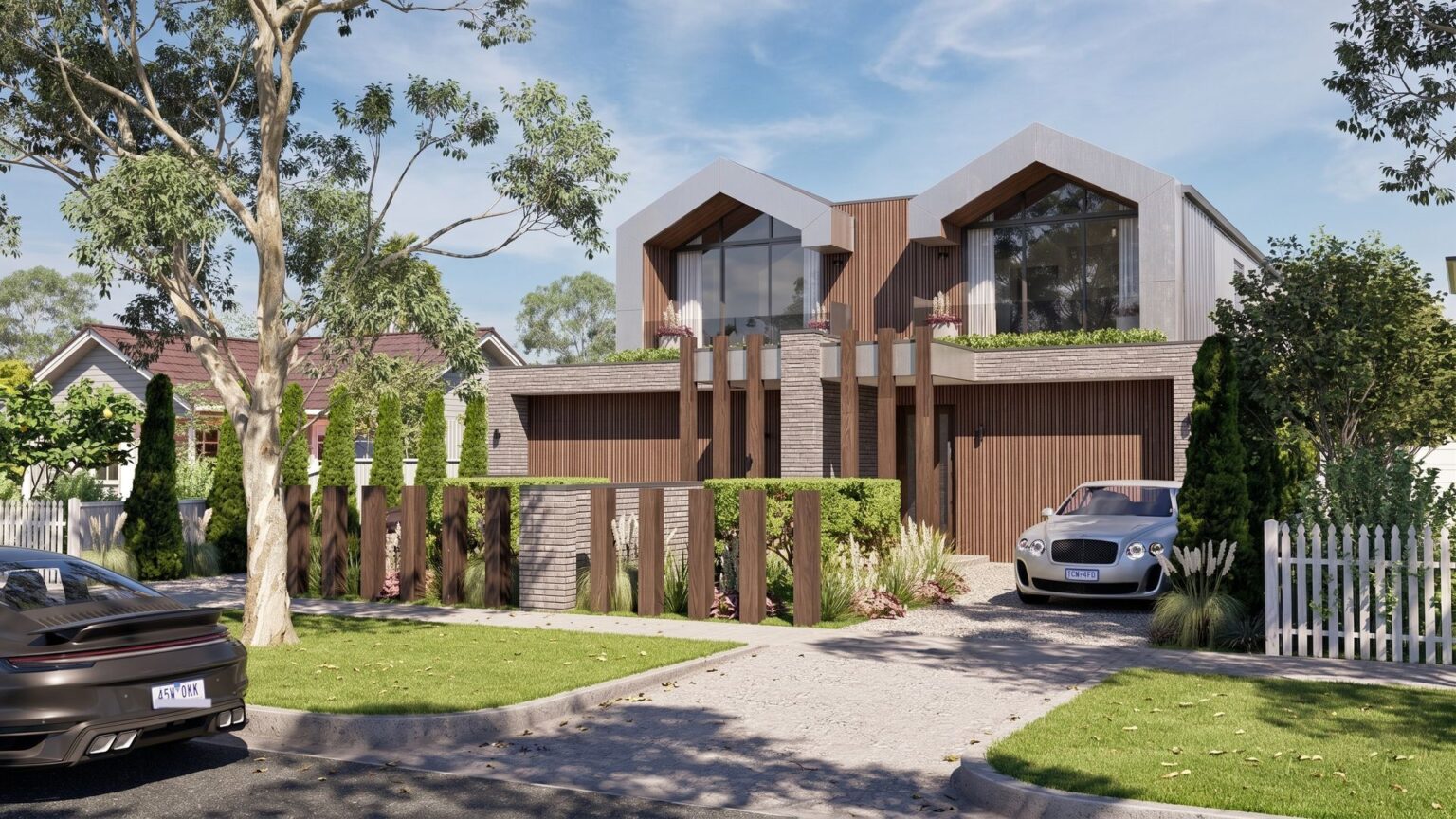
Hampton East Dual Occupancy
Hampton East · City of Bayside
Two four-bedroom homes on one 700 m² lot, each with a domestic lift and plunge pool, 633 m² in total.
Questions
Frequently asked questions
Can a building designer design multi-unit developments, townhouses or apartments?
Yes. A Building Designer (Architectural) works on all classes of buildings and types of construction
.[2] The registration class does not set a limit on the number of storeys or the size of the building.
Can a building designer get a planning permit and a building permit?
Yes. Building designers help with planning permit applications and initiate building permit applications with the building surveyor.[1][2]
Do building designers need insurance?
Yes. Professional indemnity insurance is compulsory for registered building designers, as it is for architects.[6][11]
Is NM Architecture an architectural practice?
No. NM Architecture is a building design practice. Our founder is a Registered Building Designer (Building Design, Architectural), registration DP-AD 44189.
References
Sources
All sources checked 2 November 2026.
- Victorian Government, Building: Roles and responsibilities. building.vic.gov.au
- Building and Plumbing Commission: Building designer, Building Design (Architectural). bpc.vic.gov.au
- Architects Registration Board of Victoria: What is an architect? arbv.vic.gov.au
- ARBV: Guidance for prohibited conduct, legal framework (Architects Act 1991 s 7; Building Act 1993). arbv.vic.gov.au (PDF)
- ARBV: Prohibited conduct in the architectural industry. arbv.vic.gov.au
- Building Practitioners’ Insurance Ministerial Order, Victoria Government Gazette S293, 11 July 2019, para 5. gazette.vic.gov.au
- ARBV: Professional indemnity insurance (Architects Insurance Ministerial Order, January 2020). arbv.vic.gov.au
- Victorian Government: Continuing Professional Development for Building and Plumbing Practitioners, Regulatory Impact Statement (2024). vic.gov.au (PDF)
- ARBV: CPD requirements for architects. arbv.vic.gov.au
- VBA: Two registration classes have been renamed for building practitioners (2024). vba.vic.gov.au
- Consumer Affairs Victoria: Building plans and permits. consumer.vic.gov.au
- Building and Plumbing Commission: New BPC putting consumers first from day one (1 July 2025). bpc.vic.gov.au
- Building and Plumbing Commission: Insurance (registration requirements). bpc.vic.gov.au
- Architects Accreditation Council of Australia (AACA): 2021 National Standard of Competency for Architects. aaca.org.au
- Architects Act 1991 (Vic), current version. legislation.vic.gov.au
- Building Act 1993 (Vic), current version. legislation.vic.gov.au
General information only, not legal advice. Requirements change; check with the BPC or ARBV. Last checked 2 November 2026.
Ready to get started on your project?
Contact UsThis article is general information only and does not consider your personal circumstances. Requirements vary between councils, sites and projects, and they change over time. Before you act, contact NM Architecture so we can assess your specific project and requirements.
Keep reading
More from the blog
 Building DesignBuilding on a New Estate: The Documentation You’ll NeedBuying on a new estate? Here's the documentation and consultants you need before a building permit can be lodged, plus how NM Architecture's Builder's…Read more →
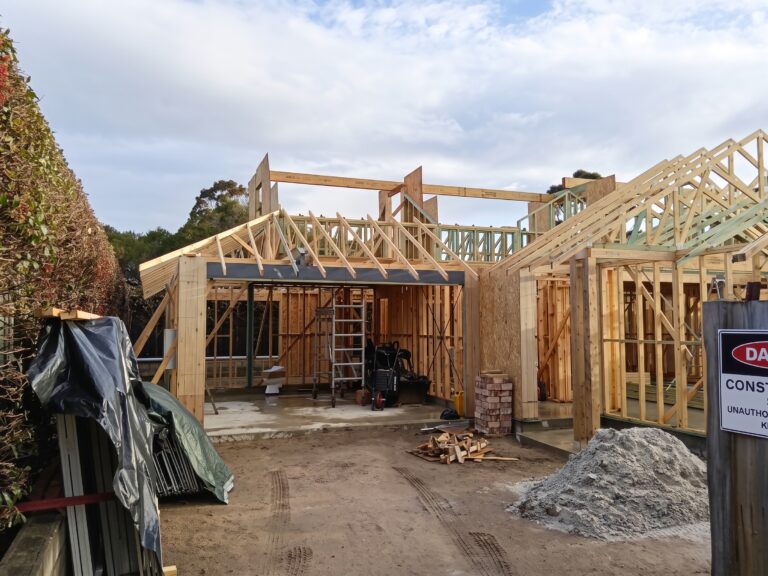 Building DesignOwner-Builder Rules in Victoria: What You Need to KnowThinking of managing your own build? Discover the owner builder rules Victoria sets for eligibility, insurance, and consent before starting your project.Read more →
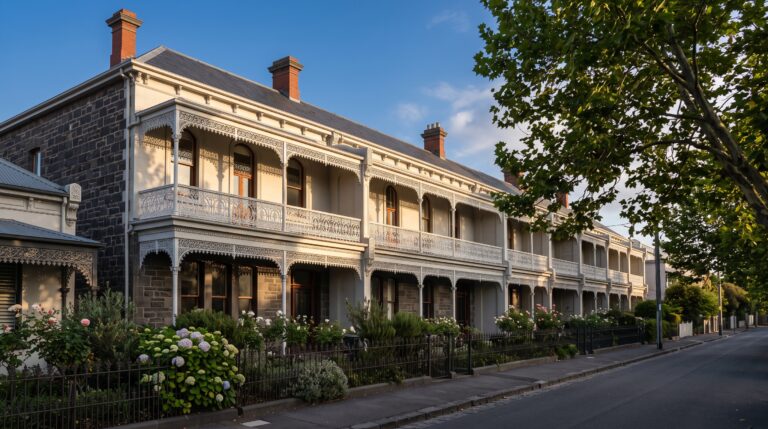 Building DesignHeritage Buildings in Melbourne: Alteration, Extension & Demolition Rules ExplainedHow Victoria's Heritage Overlay affects alterations, extensions, and demolitions on period homes in Melbourne, and what approvals you actually need.Read more →
Recent Posts
-
 November 2, 2026
Building Designer or Architect in Victoria? The Real Difference
-
 September 26, 2026
Building on a New Estate: The Documentation You’ll Need
-
 September 26, 2026
Owner-Builder Rules in Victoria: What You Need to Know
-

-
 September 8, 2026
Identifying High-Yield Subdivision Sites in Victoria
-
 September 8, 2026
Identifying High-Yield Dual-Occupancy and Two-Lot Sites